Australia is a hard place to garden in a straight line. One week is 38 degrees and drying wind, the next is a cold snap that burns off your basil overnight. That is exactly why greenhouse gardening works so well here.
A greenhouse does not need to be a big glass building. For most Australian homes, it is a small, clear shelter that traps a little warmth, blocks wind and pests, and gives you control over water and light. Start small, learn what grows in your climate, and expand from there.
This guide covers what to grow, which type of greenhouse suits a backyard or a balcony, how to stop frost and overheating, and how to set one up in a weekend.
⚡ Quick Key Takeaways
- Start small: a mini greenhouse or hoop tunnel is enough for most Australian homes.
- Best first crops: herbs, lettuce, cherry tomatoes, capsicum and strawberries.
- Biggest risks: frost in winter, overheating in summer, and wind year-round.
- Golden rule: vent on hot days, cover at night in frost, water in the morning.
🌿 At a glance: Best for beginners · Set up in one weekend · From $52.00 AUD · Best to start in spring
📖 In this guide
- Why a greenhouse works in Australia
- What to grow
- Which greenhouse to choose
- Set up in a weekend
- Frost protection
- Ventilation & overheating
- Common mistakes
- First-year plan
- Shop the setup
- FAQ
Why a greenhouse works in Australia
Australia has huge climate variation, from cool temperate Victoria and Tasmania to Mediterranean Perth and Adelaide, to subtropical Brisbane and tropical Queensland. A greenhouse helps in all of them, for different reasons.
In cooler areas, it extends the season. You can start seeds in winter, grow tomatoes earlier in spring, and keep leafy greens going longer into autumn. In warmer areas, it is less about heat and more about protection — from harsh sun, drying wind, heavy rain, birds and insects.
Greenhouses are especially helpful because they provide a controlled environment that extends the growing season, allowing you to grow crops earlier and for longer, regardless of outdoor weather conditions. That is the practical benefit most beginners notice first: fewer lost seedlings, and a harvest that does not depend entirely on a perfect week of weather.
What to grow in a greenhouse in Australia
Start with plants that are forgiving, fast, and useful in the kitchen. These are the best first crops for beginners in Australia:
Herbs and microgreens: Basil, mint, parsley, coriander and chives. They are compact, grow well in pots, and can be harvested within weeks. Microgreens like kale, radish and sunflower shoots are also nutrient-dense and fast.
Tomatoes: Tomatoes grow well in a greenhouse because of its warm, cosy atmosphere. Give them space, a trellis or stake, good airflow, and regular pruning. Cherry tomatoes are the easiest place to start.
Lettuce and leafy greens: Lettuce, spinach, silverbeet and kale thrive in cooler months and in partial shade in summer. Sow in succession every 2–3 weeks for a continuous supply.
Cucumbers, capsicum and chillies: These love warmth and consistent moisture. In a mini greenhouse, grow one or two plants in a large pot and train them up.
Strawberries and berries: Strawberries do very well under a hoop tunnel or mini greenhouse, where birds cannot get to them as easily. The Greenhouse Hoops Grow Tunnel Kit is made for exactly this — it protects tomatoes, cucumbers, strawberries and other vegetables from birds and insects while letting rain and light through.
What to plant by season: In spring, try tomatoes, capsicum, cucumber, basil, beans and zucchini. In cooler months, switch to broccoli, cauliflower, cabbage, snow peas, onions, leeks, garlic, lettuce and spinach. Check a local planting guide for your state, because planting dates in Hobart and Darwin are very different.
For a fuller list, see Sage Horticulture's guide to what to grow in a greenhouse for beginners in Australia, and Local Seeds' list of vegetables and herbs to grow in spring in Australia.
Which greenhouse should you choose?
There is no one best greenhouse. Choose by space, budget, and what you want to protect.
Compare at a glance
- Hoop tunnel — $97.00 AUD: best for raised beds, about 2.5 × 10 m
- Clear mini greenhouse — $52.00 AUD: best for balconies & patios, 50 × 60 × 130 cm
- Walk-in greenhouse: best for keen growers, room to stand — see ShopZone
- Greenhouse clamps, 50 pcs — $142.00 AUD: best for holding film in wind
Our pick for most homes: start with the clear mini greenhouse if you have a balcony, or the hoop tunnel if you have a raised bed. Both are cheap, portable, and easy to set up without tools.
1. Greenhouse hoops and grow tunnels — best for raised beds
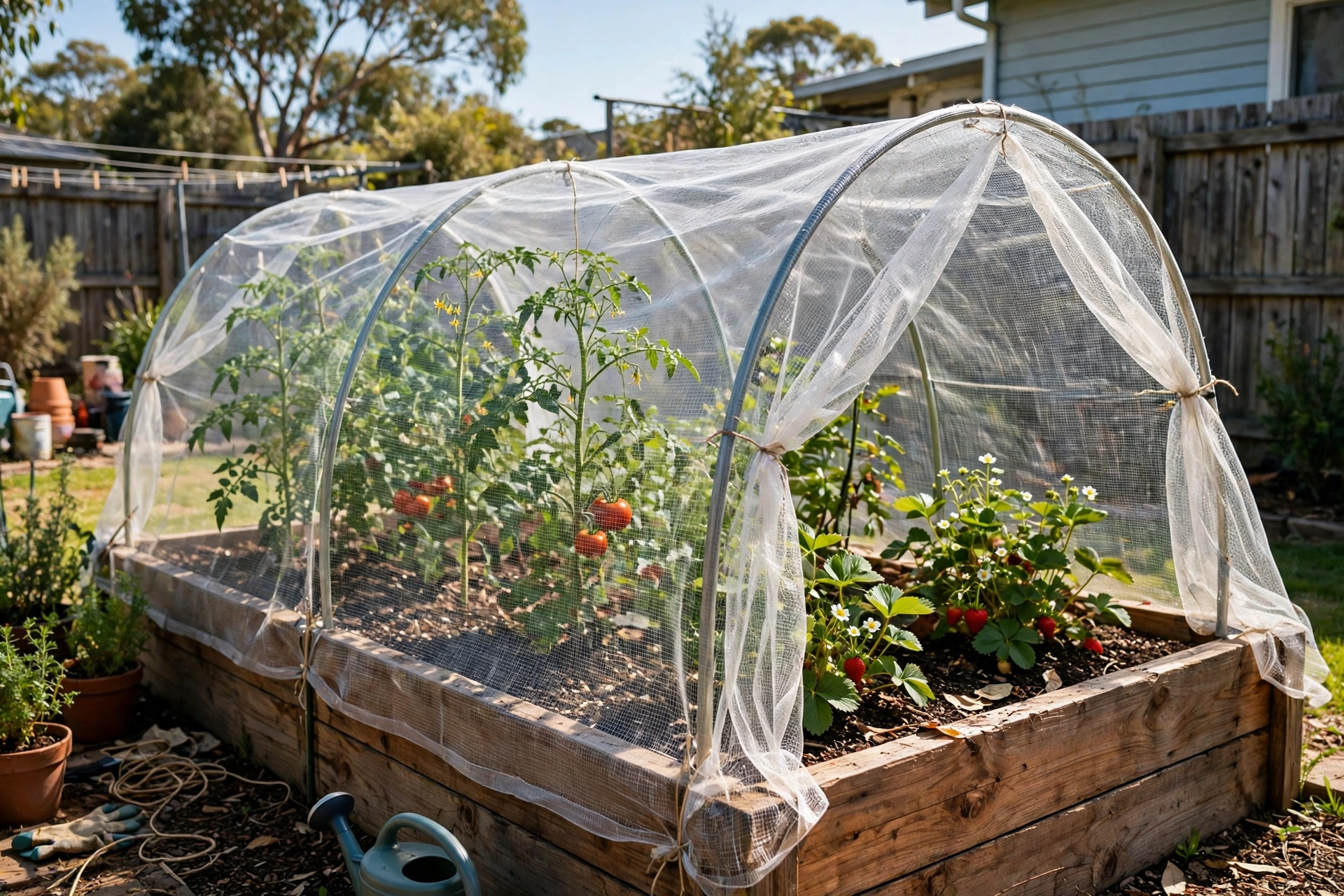
Hoops are the simplest start. You bend fibreglass or plastic hoops over a bed, cover them with mesh or clear film, and peg the edges down. They raise the temperature by a few degrees, keep out birds and insects, and protect from wind and light frost.
The Greenhouse Hoops Grow Tunnel Kit from ShopZone is $97.00 AUD and includes support rods, connecting pipes, garden stakes, clips and netting, with a net size of about 2.5 x 10 m and a hoop height of about 55 cm. It suits tomatoes, cucumbers, strawberries and other bed crops.
Use hoops when you already have a veggie bed and want cheap, movable protection.
2. Clear mini greenhouses — best for balconies, patios and small yards
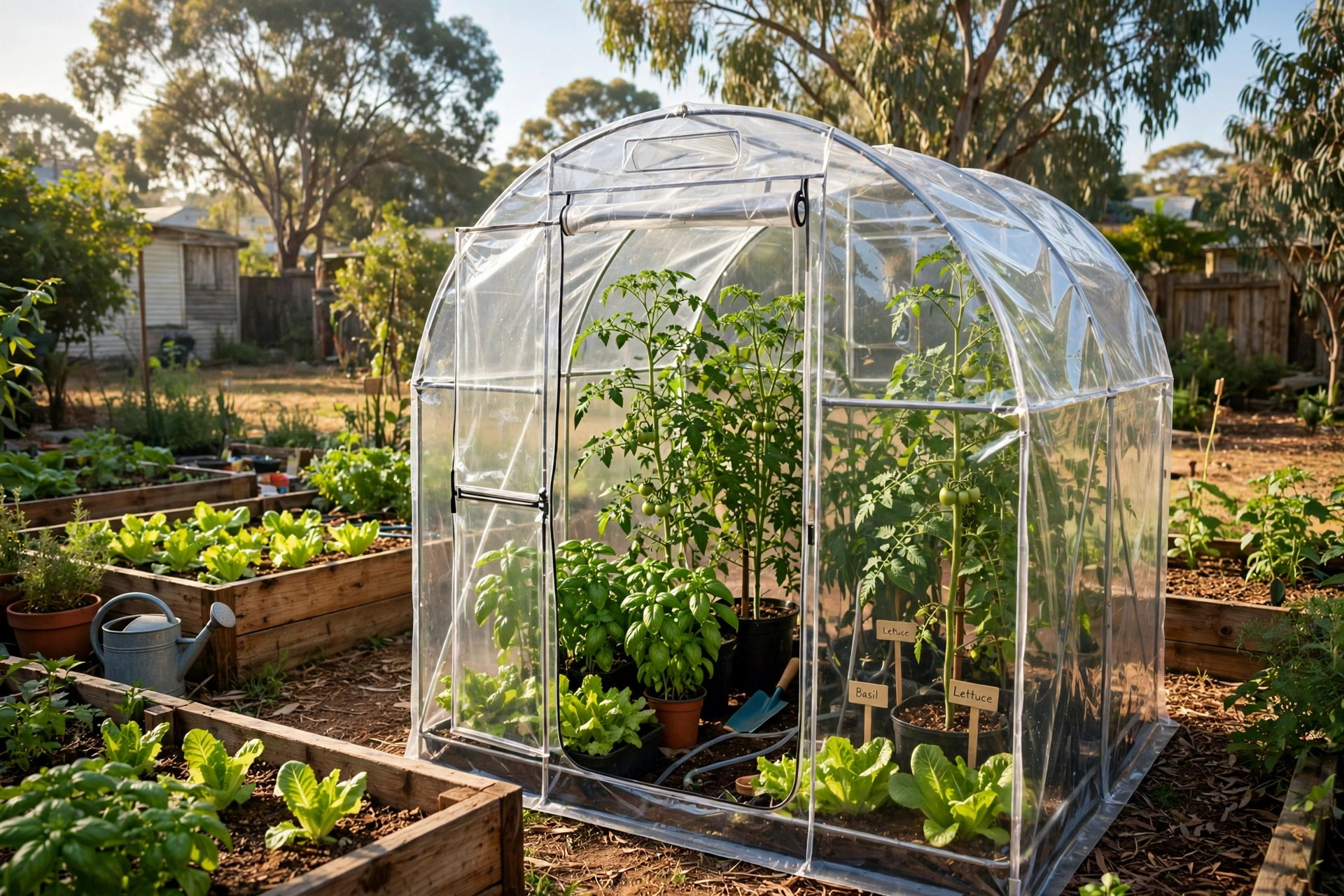
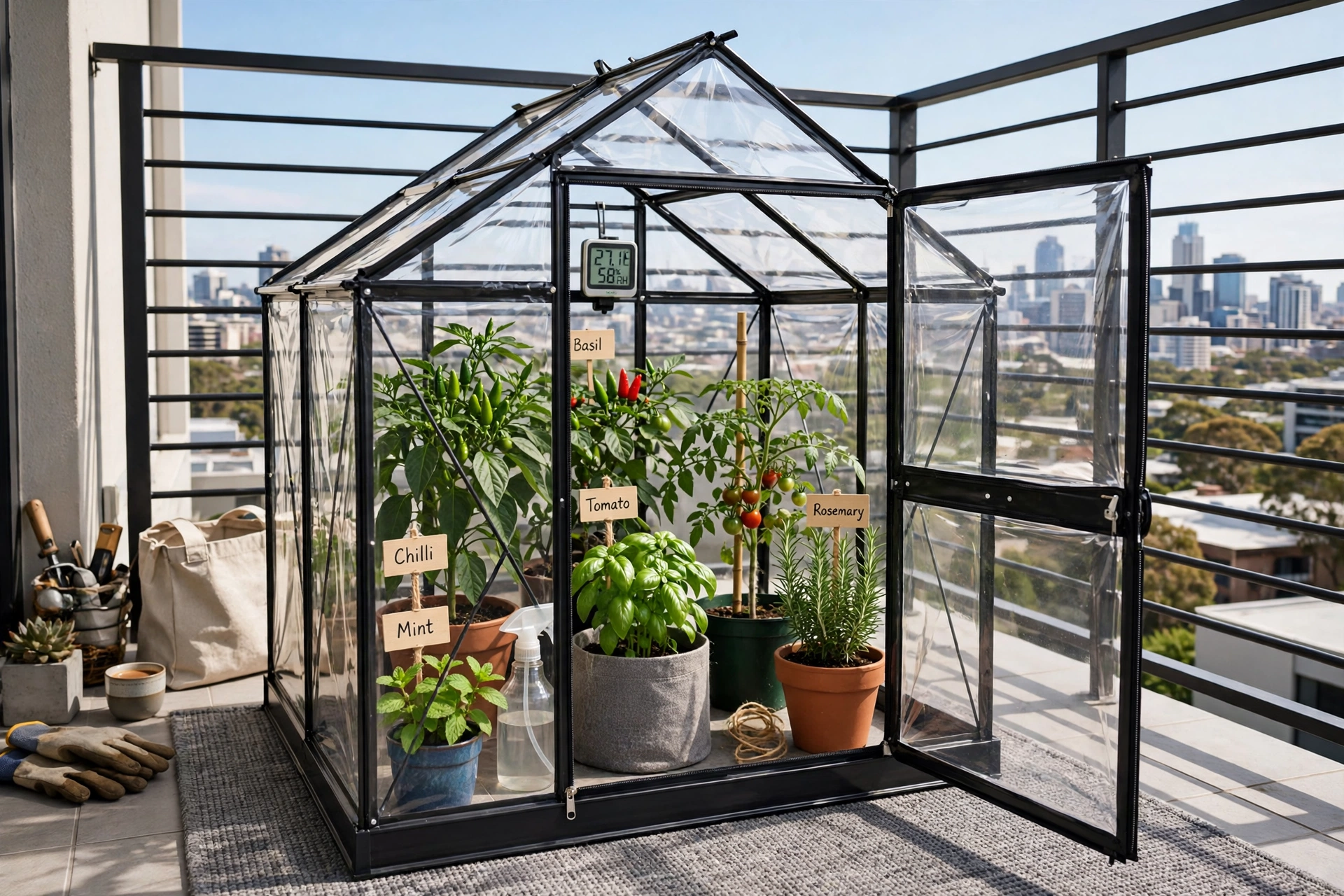
If you have no garden bed, a portable mini greenhouse is the answer. It is a steel frame with a clear cover, a zippered door, and roll-up windows for ventilation. You can put it on a balcony, patio or deck, move it with the sun, and pack it away in summer if needed.
The Clear Mini Greenhouse for Plants Indoor Outdoor with Steel Frame from ShopZone is $52.00 AUD, about 50 x 60 x 130 cm, with a powder-coated steel frame, a large zippered door, and adjustable roll-up side windows and roof vents for temperature and humidity control. It is designed for herbs, flowers, seedlings and small potted plants, indoors and outdoors.
Use a mini greenhouse when space is tight, you are renting, or you want to start seeds before transplanting them out.
3. Walk-in greenhouses — best if you want a real growing room
A walk-in greenhouse gives you room to stand, shelving for trays, and space for larger plants. It is the next step up from a mini greenhouse, and it suits keen growers who want year-round harvests.
Whichever size you choose, secure it. Australian wind will test a light cover. Use stakes, weights, or stones on the base, and tie the cover to the frame. The 50Pcs Greenhouse Clamp set from ShopZone — $142.00 AUD for 50 PE plastic clamps — is useful here: the non-slip, double-head design holds film, shade cloth and netting tightly to hoops and poles without sliding.
How to set up a greenhouse in a weekend
You do not need tools or a builder for a mini greenhouse or hoop tunnel. Do this in order:
- Pick the sunniest spot you have. Most vegetables need 6+ hours of direct sun. Morning sun is best in hot climates. Avoid a spot that floods after rain.
- Level the ground and add drainage. Put trays or pots on a slight rise, or use raised beds. Water should drain away, not pool under the cover.
- Assemble the frame, then the cover. Follow the kit instructions, peg or weight the base, and use clamps to fix the cover so wind cannot lift it.
- Add soil, compost and mulch. Good soil is the difference between a greenhouse that grows and one that just gets hot. Mix compost into potting mix, and mulch the top to hold moisture.
- Start with seedlings, not just seeds. Buy a few seedlings for your first crop, and sow seeds in trays inside the greenhouse at the same time. You will learn faster when you have something growing while the seeds catch up.
- Water in the morning. Water early so leaves dry during the day. In a greenhouse, check soil with your finger to the second knuckle — if it feels dry, water; if it feels moist, wait.
✅ Your first-weekend checklist
- ☐ Sunniest spot picked
- ☐ Ground levelled
- ☐ Frame + cover fixed
- ☐ Soil, compost + mulch in
- ☐ Seedlings planted
- ☐ Watered in the morning
- ☐ Vents opened on hot days
Frost protection: the Australian winter problem
Frost can be a real problem for plants during the winter months, especially in inland NSW, Victoria, Tasmania and the Adelaide Hills. A greenhouse helps, but it is not magic on a -2°C night.
❄️ Frost warning: inland NSW, Victoria, Tasmania and the Adelaide Hills get real frost in winter. Cover at night, vent in the morning — a greenhouse helps, but it is not magic on a −2°C night.
Use these layers together:
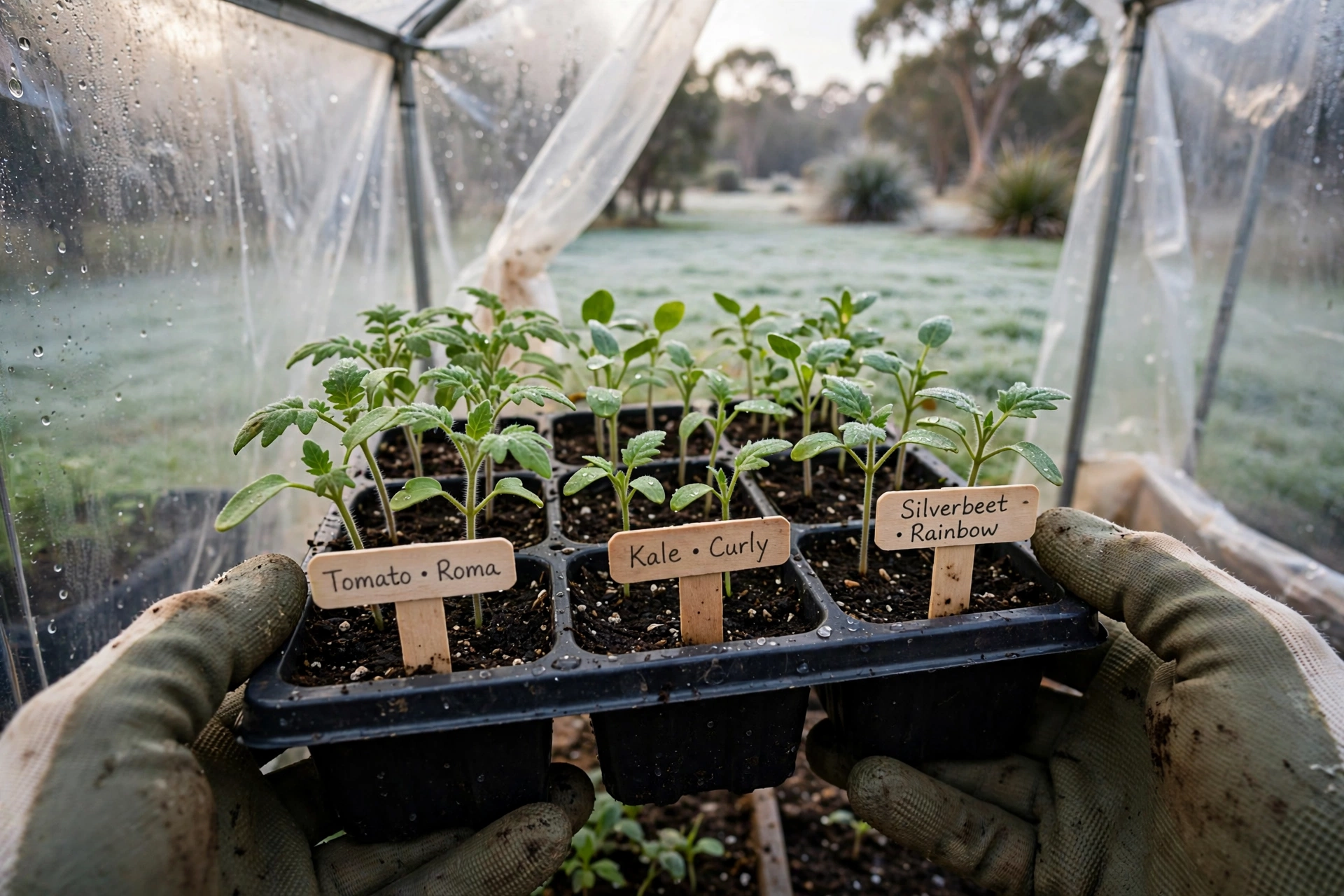
- Cover at night, vent in the day. Cover plants in the evening before the temperature drops, and remove or open covers in the morning when the sun comes up. Greenhouse tunnels can create a mini greenhouse effect over your garden and raise the temperature by several degrees, and also protect from wind, rain and pests.
- Mulch and water wisely. Mulch acts as an insulator around the base of plants. Water in the morning in winter, so water reaches the roots before night and does not freeze on leaves.
- Use a mini greenhouse inside the greenhouse. Small seedlings in trays inside a clear mini greenhouse get double protection.
- Do not let covers touch leaves. Use hoops, stakes or a frame to hold frost cloth or plastic away from foliage, or cold can transfer through the fabric.
For more detail, read Bunnings' guide on how to protect plants from frost, and Stratco's guide on how to protect your garden from frost.
💡 Pro Tip for Australian Winters
Cover at night, vent in the morning, and never let frost cloth touch the leaves — use hoops or stakes to hold it up.
Ventilation and overheating: the Australian summer problem
A closed greenhouse in Australian summer can roast plants in an hour. This is the most common beginner mistake.
🔥 Heat warning: a closed greenhouse in Australian summer can roast plants in an hour. If it feels too hot for you to stand in for 10 minutes, it is too hot for most seedlings. Vent it.
- Open the door and windows on sunny days. Roll up side windows and open the zippered door to let excess heat escape and improve airflow.
- Use shade cloth in extreme heat. A 30–50% shade cloth over the top in January and February can save lettuce and herbs.
- Water more, but do not overwater. Greenhouses hold humidity, so you may water less often than outside, but in very hot weather you may need to water daily, preferably in the morning.
- Prune for airflow. Do not let a greenhouse become a jungle. Regular pruning prevents overcrowding, helps airflow, and gives every plant light.
A good rule: if it feels too hot for you to stand in comfortably for 10 minutes, it is too hot for most seedlings. Vent it.
Common mistakes to avoid
- Putting a greenhouse in full shade. It needs sun to work.
- Leaving it sealed all day in summer. Vent daily.
- Overwatering. Check soil first, every time.
- Growing too much, too close. Give tomatoes and cucumbers room, or disease spreads fast.
- Forgetting wind. Anchor every cover, every time.
A simple first-year plan
Month 1: Set up a mini greenhouse or hoop tunnel. Plant herbs, lettuce and cherry tomatoes.
Month 2–3: Sow seeds in trays inside the greenhouse. Transplant the strongest seedlings out.
Month 4–6: Harvest, prune, and succession-sow lettuce and herbs every few weeks.
Winter: Use the greenhouse for frost protection, grow leafy greens and brassicas, and start next spring's seeds early.
You do not need to do it perfectly. You need a sheltered spot, decent soil, water in the morning, and a habit of opening the vents on hot days.
Shop the setup on ShopZone
Start with the two pieces most Australian beginners actually use:
Greenhouse Hoops Grow Tunnel Kit — $97.00 AUD
Raised beds, tomatoes, strawberries & cucumbers. Shop hoops →
Clear Mini Greenhouse with Steel Frame — $52.00 AUD
Balconies, patios, herbs & seedlings. Shop mini greenhouse →
50Pcs Greenhouse Clamp — $142.00 AUD
Hold film & netting tight in wind. Shop clamps →
Browse the full Home & Garden range at ShopZone Australia.
⭐ Our verdict: you do not need the biggest greenhouse. You need a sheltered spot, decent soil, water in the morning, and a habit of opening the vents on hot days. Start small, learn what grows in your climate, and expand from there.
FAQ
What is the best greenhouse for beginners in Australia?
A clear mini greenhouse or a hoop tunnel kit. A mini greenhouse suits balconies and patios, while hoops suit raised beds. Both are cheap, portable, and easy to set up without tools.
What can I grow in a mini greenhouse in Australia?
Herbs, lettuce, spinach, tomatoes, capsicum, chillies, cucumbers and strawberries. Start with herbs and cherry tomatoes — they are the most forgiving.
Do I need a greenhouse in Australia?
Not always, but it helps a lot. It extends the growing season, protects from frost, wind, birds and pests, and lets you start seeds earlier.
How do I stop my greenhouse overheating in summer?
Open doors and windows daily, use shade cloth in extreme heat, water in the morning, and prune for airflow. Never leave a small greenhouse sealed on a hot sunny day.
How do I protect plants from frost in a greenhouse?
Cover at night, vent in the morning, mulch around plants, and keep covers off leaves with hoops or stakes. A mini greenhouse inside a larger shelter gives double protection.
Can I use a greenhouse on a balcony?
Yes. A compact clear mini greenhouse, about 50 x 60 x 130 cm, fits most balconies and is ideal for potted herbs and seedlings. Anchor it well in wind.