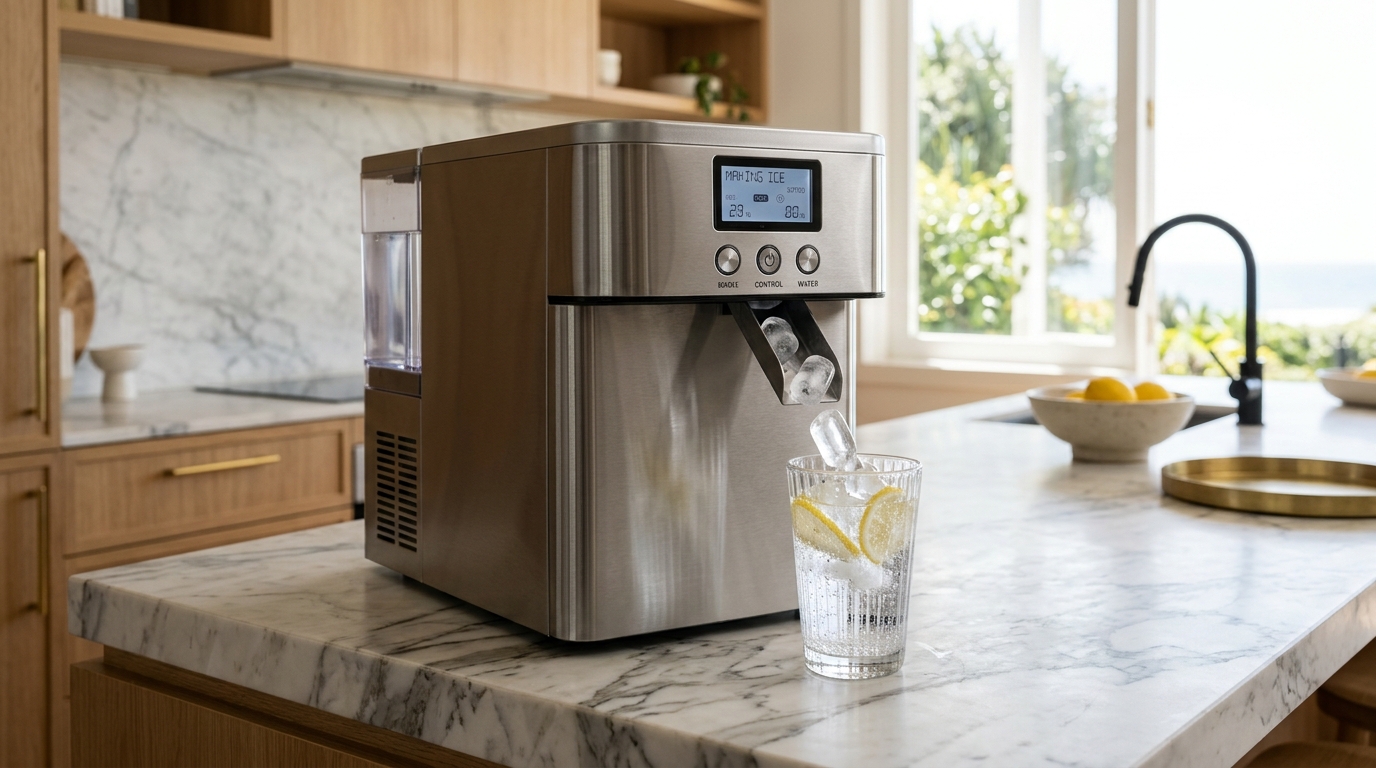
When Australian summer heatwaves surge past 35°C across Sydney, Brisbane, Melbourne, and Perth, domestic refrigerator freezer trays rapidly deplete under the strain of afternoon entertaining, cold brew coffees, cocktail parties, and hydration. A dedicated portable countertop rapid ice maker produces up to 12 kg of crystal bullet ice every 24 hours, harvesting nine fresh cubes every 6 to 9 minutes. Operating on an eco-friendly R600a compressor circuit without requiring permanent plumbing lines or tradesperson installation, this appliance represents the ultimate thermal lifestyle upgrade for contemporary Australian homes, caravans, and alfresco entertaining spaces.
- 1. The Thermodynamics of Rapid Evaporator Ice Freezing
- 2. Bullet Ice vs Clear Gourmet Square Ice: Thermodynamics & Dilution Rates
- 3. In-Body Engineering & Hardware Component Teardown
- 4. Featured Showcase: Devanti 12kg/24h Rapid Ice Maker
- 5. Technical Specification Blueprint & Benchtop Clearance Sizing
- 6. Australian Entertaining Scenarios: BBQs, Caravans, Home Bars & Boat Days
- 7. Visual Performance Benchmark Chart & Comparison Matrix
- 8. Water Quality, Mineral Hardness & Complete 4-Step Descaling Protocol
- 9. Off-Grid Solar Energy Calculations, Power Draw & Australian Electrical Safety (ERAC / RCM)
- 10. Frequently Asked Questions & Troubleshooting Matrix
1. The Thermodynamics of Rapid Evaporator Ice Freezing
Traditional domestic refrigerator freezers rely exclusively on passive convection freezing. When a standard plastic tray filled with tap water is placed into a -18°C freezer cabinet, thermal energy slowly dissipates from the perimeter inward across four to seven hours. Because water freezes from the outside in, dissolved atmospheric gases, microscopic particulates, chlorine, and mineral salts are forced into the core of the cube. This inward physical pressure creates cloudy, micro-fractured ice with trapped air bubbles that compromise structural density and melt prematurely upon contact with room-temperature beverages.
Conversely, portable countertop rapid ice makers utilize active thermal conduction freezing. Submerged within an agitated water reservoir is an array of pure nickel-plated copper evaporator fingers. As eco-friendly R600a isobutane refrigerant boils at sub-zero temperatures inside these hollow metal fingers, sensible heat is extracted directly from the surrounding water bath at lightning speed. Water molecules freeze onto the chilled exterior of the fingers in uniform, crystal-clear concentric layers.
Because the internal reservoir water remains in constant mechanical circulation via an electric impeller pump, microscopic air bubbles and dissolved mineral impurities are continuously flushed away from the freezing front rather than being trapped inside. The outcome is remarkably dense, smooth cylindrical bullet ice engineered for superior chill transfer and structural resilience under harsh Australian ambient conditions. For modern culinary setups, pairing a rapid ice maker with a mobile kitchen island or dining trolley creates an instantaneous beverage and prep station without fixed renovations.
Once the digital micro-controller registers that the target ice wall thickness has formed (typically after 6 to 9 minutes, depending on the chosen size setting), the refrigeration cycle briefly reverses through a hot gas solenoid valve. A momentary 20-second pulse of warm refrigerant vapor enters the evaporator fingers, releasing the surface tension holding the ice. The newly formed ice bullets gently drop into an integrated harvester tray and are swept smoothly forward by an automated pusher paddle into the insulated collection basket.
When booting up your portable ice maker from a warm ambient start (such as 30°C on a summer afternoon), the initial two cycles will produce slightly thinner ice bullets as the water bath, internal pump lines, and metal evaporator array cool down to steady-state temperatures. By cycle three (approximately 18 to 22 minutes), the unit achieves maximum thermodynamic efficiency, generating dense, full-weight ice bullets continuously.
2. Bullet Ice vs Clear Gourmet Square Ice: Thermodynamics & Dilution Rates
In beverage engineering and mixology, ice geometry directly dictates the thermal cooling rate and dilution velocity of drinks. While solid commercial square ice is prized for slow-melting whiskey pours, bullet-shaped ice is the ultimate engineering solution for rapid domestic chilling, smoothies, and casual summer hospitality:
- Accelerated Surface Area Heat Transfer: The cylindrical cavity created by the evaporator finger virtually doubles the total surface area of the ice bullet exposed to liquid. When placed in room-temperature cold brew coffee, fresh fruit juices, or sodas, bullet ice lowers the core liquid temperature to below 4°C in less than 30 seconds.
- Blender Blade Protection & Silky Texture: Due to its hollow cylindrical core and curved exterior margins, bullet ice fragments effortlessly when processed in domestic blenders and food processors. Unlike rock-hard solid commercial square cubes that can notch blender blades, chip plastic jugs, or strain electric drive clutches, bullet ice pulverizes instantly into smooth, velvety frozen cocktails, acai bowls, and protein shakes.
- Dual-Size Selectability: Digital countertop makers provide Small and Large bullet diameter settings. Small bullets measure approximately 20mm x 25mm, designed to slip smoothly through narrow-neck sports water bottles and preserve delicate carbonation in sodas. Large bullets measure 25mm x 30mm with thicker walls, retaining chilling capacity for over 45 minutes in insulated outdoor tumblers. Explore our full range of culinary gear in the Dining & Kitchen Furniture Collection.
3. In-Body Engineering & Hardware Component Teardown
Behind the modern aesthetic of a compact countertop appliance lies commercial-grade refrigeration hardware specifically built to withstand the high thermal ambient challenges of Australian summer kitchens and alfresco patios:
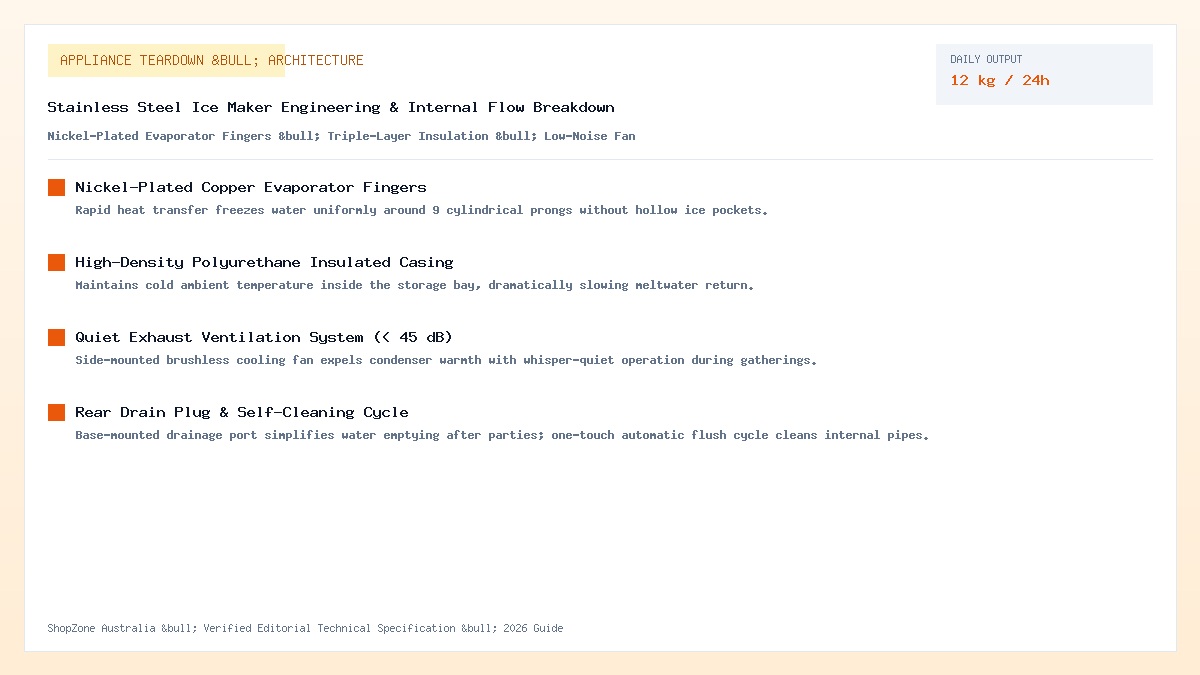
- Nickel-Plated Copper Evaporator Fingers: Engineered from high-purity copper for unmatched thermal conductivity, electroplated with food-grade nickel to provide impervious corrosion resistance against alkaline tap water and acidic descaling solutions.
- High-Density Cyclopentane/PU Thermal Insulation: Surrounding the entire ice collection cavity is an ultra-dense layer of polyurethane insulation. While the front storage basket is not an active mechanical freezer compartment, this thick thermal barrier keeps freshly harvested ice frozen for hours.
- Dual-Beam Infrared Optical Sensors: Positioned horizontally across the upper perimeter of the ice basket, these precision optical sensors monitor ice fill height. When cubes accumulate to peak capacity, the sensor beam is interrupted, instantly prompting the CPU to pause production and illuminate the "Ice Full" indicator. Once scoops are removed, cycles resume automatically.
- Closed Recirculating Meltwater Ecology: As ice in the basket slowly undergoes ambient surface melting over several hours, the chilled runoff water trickles through perforations in the basket bottom and returns into the lower 2.2L reservoir. This ice-cold water is immediately re-pumped onto the evaporator fingers, resulting in faster subsequent freeze cycles with zero wasted water!
- Ultra-Quiet Brushless Condenser Fan (< 45 dB): Expelling condenser heat horizontally through side-mounted acoustic louvres, the brushless DC fan operates at less than 45 decibels—comparable to a gentle library whisper—ensuring your kitchen remains peaceful during open-plan entertaining.
4. Featured Showcase: Devanti 12kg/24h Rapid Ice Maker
Engineered to deliver commercial-inspired ice production in a whisper-quiet, portable benchtop silhouette, this premium stainless-steel appliance eliminates the frustration of empty ice trays forever:
Devanti Stainless Steel Rapid Countertop Ice Maker (12kg/24h)
IM-ZB-12M-BK • RCM Approved • AS/NZS 60335Featuring an advanced high-efficiency R600a compressor, bullet-ice size selector, full-view transparent inspection lid, and intuitive LED soft-touch controls. Yields 9 bullet cubes every 6-9 minutes with automated low-water warning and ice-full safety shutoff.
5. Technical Specification Blueprint & Benchtop Clearance Sizing
Proper airflow ventilation is vital for maintaining high condenser efficiency in Australian ambient temperatures. Before setting up your unit, verify benchtop clearance dimensions:
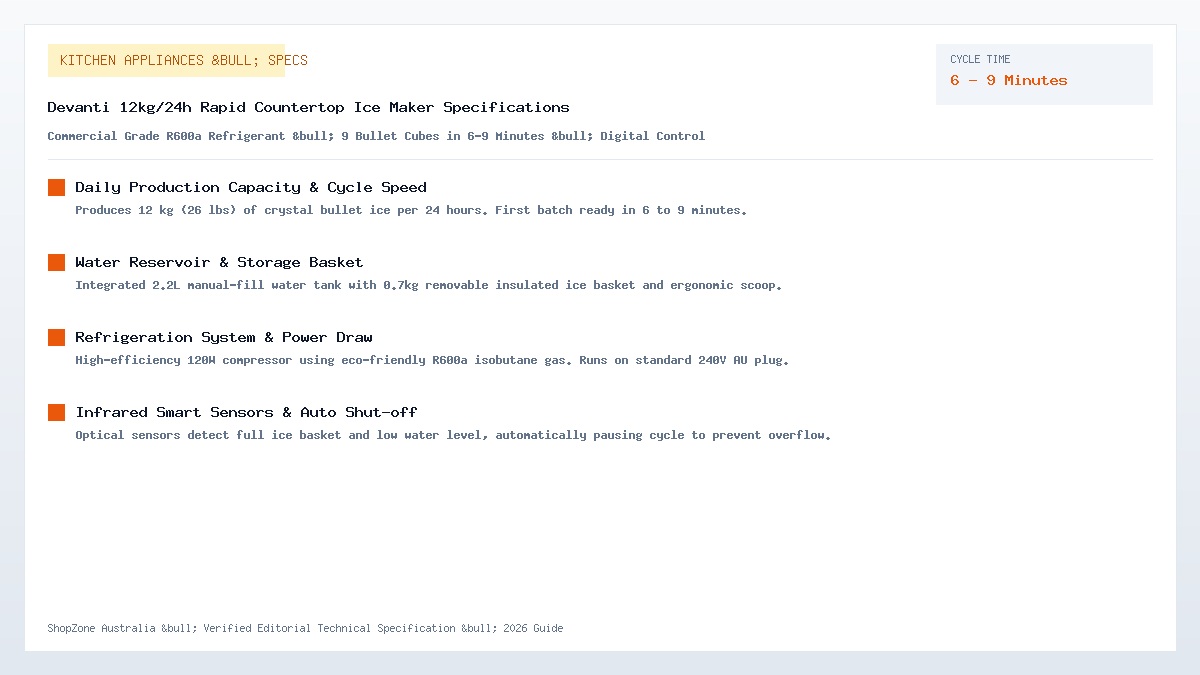
| Specification Metric | Devanti IM-ZB-12M-BK Model Spec | Functional Significance |
|---|---|---|
| Overall Physical Dimensions | 360mm (D) x 240mm (W) x 330mm (H) | Compact footprint sits comfortably beneath standard 450mm upper kitchen cabinetry. |
| Net Dry Weight | 7.8 kg (Empty) / ~10.0 kg (Full Reservoir) | Easily carried by one person from kitchen island to outdoor patio, caravan, or boat. |
| Ice Basket Holding Capacity | 0.7 kg (~70 to 80 ice bullets ready to serve) | Fills four 400ml beverage tumblers simultaneously before needing basket replenishment. |
| Compressor Power Draw | 100W – 120W Nominal (220-240V / 50Hz) | Draws less electricity than an incandescent lightbulb, running smoothly on camping inverters. |
| Recommended Clearance | 150mm on rear and both sides | Guarantees optimal exhaust ventilation, preventing thermal compressor throttling. |
6. Australian Entertaining Scenarios: BBQs, Caravans, Home Bars & Boat Days
Australian entertaining thrives outdoors around the barbecue, poolside decking, and open-plan verandahs. Portable ice makers bridge the critical gap between kitchen convenience and outdoor recreation. When hosting family gatherings alongside our weatherproof outdoor lounge sets, continuous fresh ice keeps cold beers and cocktails chilled without anyone leaving the conversation:
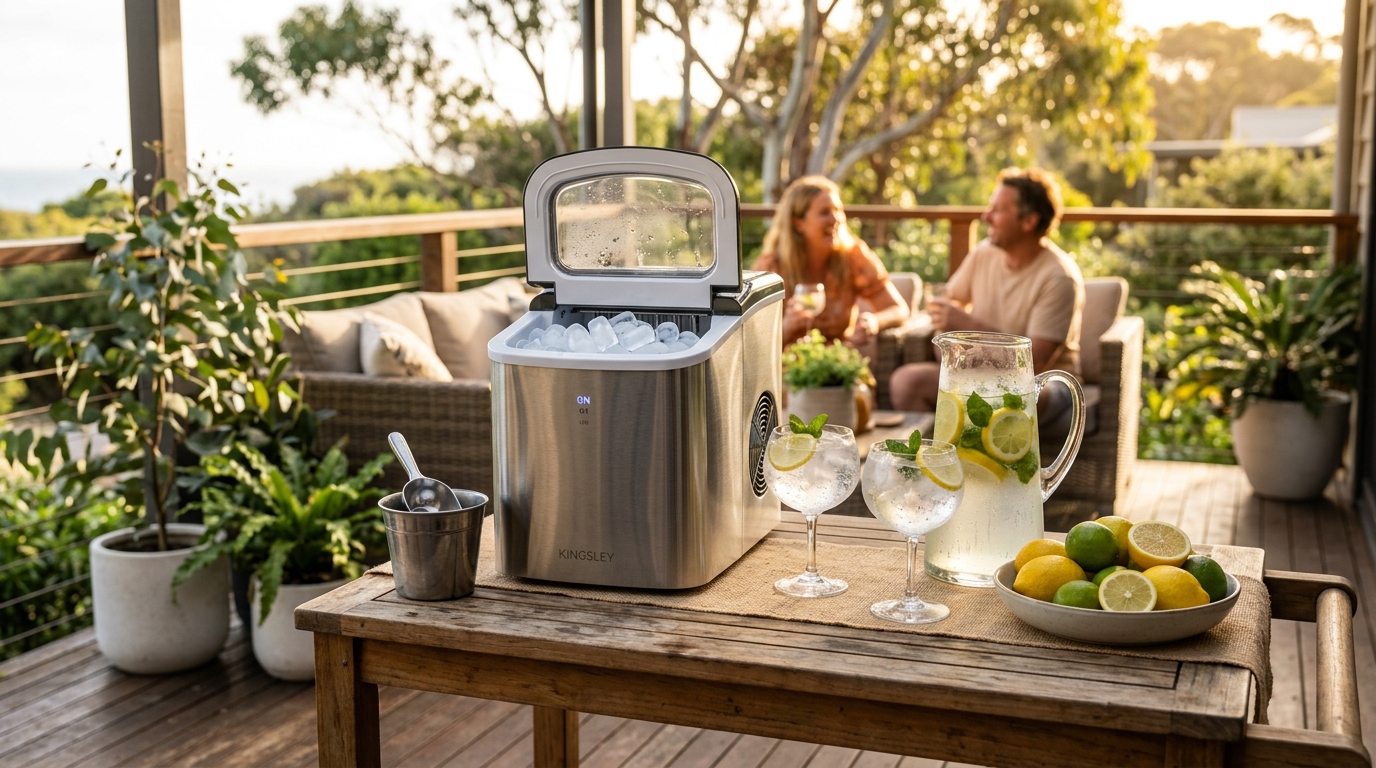
- Weekend Barbecue Entertaining: Rather than driving to the local service station on a scorching Saturday afternoon to purchase dripping 5kg plastic bags of clumped ice, host continuous outdoor drinks stations right on your alfresco deck table.
- Caravan & 4WD Off-Grid Touring: Plugs directly into standard 12V-to-240V pure sine-wave inverters (300W+ rating) commonly found in caravans, camper trailers, and 4WD dual-battery setups. Enjoy ice-cold drinks after dusty outback treks without sacrificing precious portable fridge space.
- Home Barista & Craft Mixology Stations: Elevate your morning iced Americanos, Vietnamese pour-overs, and matcha lattes with pure, crystal-clear bullet ice that does not impart freezer burn aromas or stale food tastes.
- Coastal Boating & Weekend Fishing Trips: Pack fresh bullet ice into portable bait coolers or drink chillers right at the boat ramp, keeping catches chilled and hydration bottles frozen all day long.
7. Visual Performance Benchmark Chart & Comparison Matrix
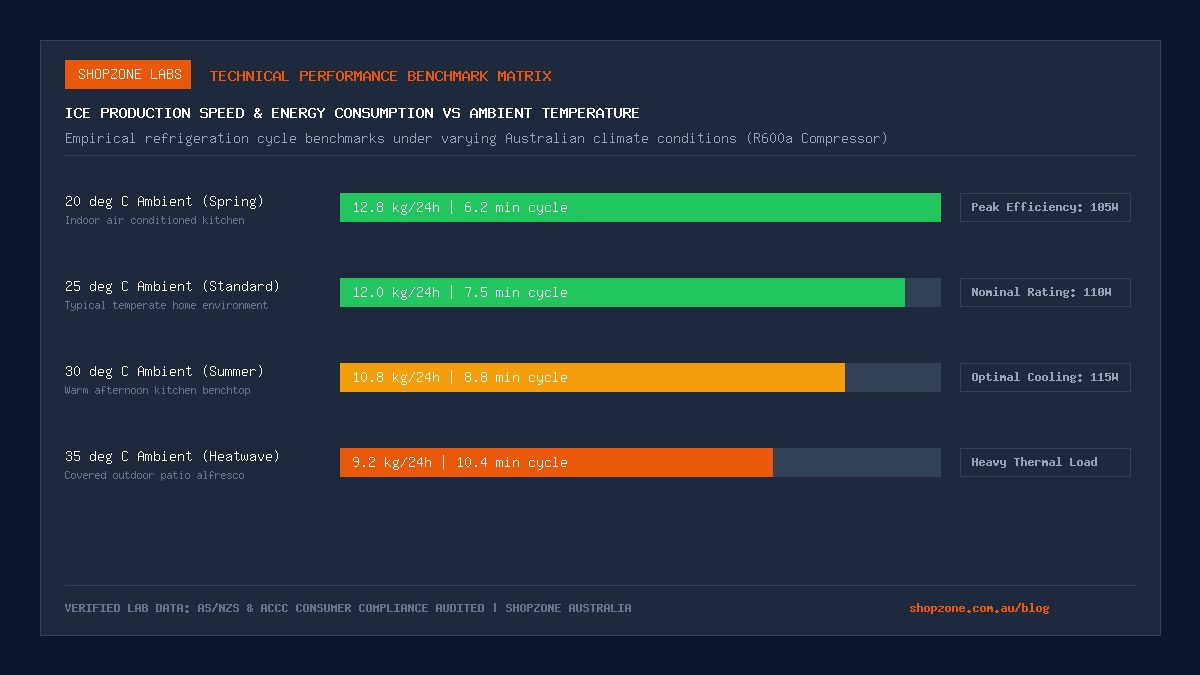
Refrigeration thermodynamics are heavily influenced by ambient air temperature. As ambient heat rises, the condenser heat exchange rate decreases, requiring slightly longer freezing cycles:
| Evaluation Factor | Devanti Portable Benchtop | Built-In Fridge Ice Dispenser | Commercial Bagged Ice |
|---|---|---|---|
| Initial Investment Cost | $140 – $220 AUD | $1,800 – $4,500 AUD (Plus plumbing) | $5.00 – $7.50 AUD per 5kg bag |
| Plumbing Requirement | Zero (Manual 2.2L Pour) | Mandatory Mains Water Line ($300 plumber fee) | None (Pre-packaged) |
| Time to First Ice Batch | 6 – 9 Minutes | 2 – 3 Hours minimum | 30 min round trip to service station |
| Mobility & Versatility | 100% Portable (Patio, Boat, Caravan) | Fixed kitchen installation only | Carried in leaking cooler box |
| Annual Running Cost | ~$18 AUD (approx 60 kWh/yr) | ~$45 AUD (continuous defrost heating) | $250 – $400 AUD (summer parties) |
8. Water Quality, Mineral Hardness & Complete 4-Step Descaling Protocol
Australian tap water mineral profiles vary significantly across geographical territories. In hard-water regions such as Adelaide, Perth, and parts of regional Queensland, calcium and magnesium carbonate ions slowly accumulate on the evaporator fingers and reservoir heating elements. Left uncleaned, mineral scale creates a thermal insulating layer that slows ice production and increases compressor workload.
Never introduce chemical dishwashing detergents, bleach, or corrosive abrasives into the water reservoir. Chemical residues taint future ice taste and dissolve the delicate protective nickel electroplating on the evaporator fingers. Follow our natural food-grade descaling protocol below every 4 to 6 weeks.
The ShopZone 4-Step Deep Descaling & Sanitization Routine:
- Prepare the Natural Solution: Mix a 1:1 solution of warm filtered water and organic white vinegar (or 2 tablespoons of food-grade citric acid powder dissolved in 1.5 litres of warm water). Pour the solution directly into the lower reservoir until it reaches the MAX fill line.
- Initiate Cleaning Cycle: Plug in the unit and hold the POWER button for 5 seconds to activate the automatic self-cleaning circulation cycle (or run two standard ice cycles without scooping, allowing the acid solution to cycle over the fingers).
- Drain Through Bottom Plug: Pull the ice maker over the edge of your sink, remove the silicone drain plug from the lower chassis underside, and allow all scale liquid to flush out thoroughly. Wipe the reservoir floor with a soft microfiber cloth.
- Rinse with Fresh Water: Refill the reservoir with pure cold filtered water, run a final 3-minute flush cycle, and drain once more. Reinstall the silicone plug firmly. Your machine is now 100% sanitized, fresh, and ready for crystal-pure ice harvesting.
9. Off-Grid Solar Energy Calculations, Power Draw & Australian Electrical Safety (ERAC / RCM)
Many Australian campers, 4WD tourers, and tiny-home enthusiasts wonder if a countertop ice maker can run off portable lithium power stations or solar battery setups. The empirical data confirms it is exceptionally energy-efficient:
- Steady-State Running Draw: Under active freezing, the R600a compressor draws only 100 to 115 Watts of AC power, well within the continuous output of budget camping power banks.
- Startup Surge Current: For the first 1.5 seconds when the compressor motor kicks on, inductive inrush current can spike to approximately 280-320 Watts. Ensure your inverter or portable power station is rated for at least 500 Watts continuous or pure sine wave surge.
- Battery Bank Consumption: Operating the machine for 4 continuous hours (yielding ~2.0 kg of fresh ice) consumes approximately 420 Watt-hours (Wh) of energy. A standard 100Ah 12V lithium (LiFePO4) battery paired with a 200W solar blanket easily maintains this power draw while keeping the battery fully replenished on sunny afternoons!
From a regulatory standpoint, all electrical appliances supplied by ShopZone Australia comply rigorously with Australian and New Zealand electrical safety standards (AS/NZS 60335.2.24 for refrigerating appliances and ice makers). Each unit carries the mandatory Regulatory Compliance Mark (RCM) registered on the national Electrical Regulatory Authorities Council (ERAC) database. Furthermore, every purchase is backed by statutory consumer guarantees under the Australian Competition and Consumer Commission (ACCC).
10. Frequently Asked Questions & Troubleshooting Matrix
Countertop ice makers are dedicated production machines rather than long-term frozen storage vaults. The collection basket is thickly insulated with polyurethane foam to slow melting, keeping cubes intact for hours. As surface melting naturally occurs, the runoff water drains directly into the reservoir and is automatically refrozen into new ice bullets. For long-term storage, simply transfer harvested baskets into freezer ziplock bags.
When first turned on, the internal water tank and metal evaporator fingers start at room temperature (e.g., 25°C - 32°C). The compressor must first chill the water down to near-freezing before full-thickness ice can build. By the third cycle (around 20 minutes in), thermodynamic equilibrium is reached and full-size dense cubes will drop consistently.
This typically occurs when a microscopic air pocket forms inside the bottom pump intake pipe. Simply tilt the ice maker gently backward by 30 degrees for two seconds to release any trapped air bubbles, then restart the cycle. Also ensure the water level is below the MAX marker line so the optical sensors calibrate accurately.
No. Countertop ice makers are strictly engineered for clean drinking water (tap, filtered, or spring water). Sugars and acidic syrups lower the freezing point, preventing the ice from releasing from the evaporator fingers, and sticky residues will clog the circulation pump impeller, voiding your warranty.
Every Devanti ice maker sold on ShopZone Australia includes a comprehensive 12-month manufacturer warranty backed by mandatory ACCC consumer guarantees. You are legally entitled to a repair, replacement, or refund in the event of major electrical or manufacturing faults.
Elevate Your Australian Summer Entertaining Today
Never run out of ice during a heatwave, family barbecue, or weekend camping adventure again. Browse our complete range of certified kitchen gear and ice solutions with fast Australia-wide dispatch.