Whether crossing the Simpson Desert, beach camping on Fraser Island (K'gari), or touring the Victorian High Country, reliable off-grid electricity is vital for powering 12V dual-zone compressor fridges, charging drones and laptops, running CPAP breathing machines, and operating induction cooktops. Traditional heavy AGM lead-acid auxiliary battery setups weigh down 4WD payloads and degrade after only 300 to 400 shallow cycles. In this 2026 technical guide, ShopZone engineers tear down next-generation LiFePO4 (Lithium Iron Phosphate) Portable Power Stations paired with monocrystalline Folding Solar Blankets, evaluating pure sine wave inverter harmonic distortion, MPPT solar tracking velocity, thermal runaway safety, and compliance with Australian standard AS/NZS 3001.2:2022.
- 1. Battery Chemistry: Why LiFePO4 Outlasts Traditional AGM & NMC Lithium
- 2. Inverter Architecture: Pure Sine Wave vs Modified Sine Wave Electronics Hazards
- 3. Watt-Hour (Wh) Sizing Blueprint: Fridges, Induction, CPAP & Starlink
- 4. In-Body Engineering & Giantz 1200W LiFePO4 Hardware Teardown
- 5. Featured Product Showcase: Giantz 1024Wh LiFePO4 Power Station & 200W Solar Kit
- 6. MPPT vs PWM Solar Controllers: Maximizing Amp Yield in Shaded Campsites
- 7. Visual Performance Benchmark: Battery Cycle Lifespan & Thermal Breakdown Thresholds
- 8. 4WD Touring & GVM Payload Savings: 12kg Lithium vs 35kg Lead-Acid
- 9. Australian Standards AS/NZS 3001.2:2022 & ERAC Electrical Compliance
- 10. Field Maintenance, Cold-Weather Chargethrottling & Long-Term Storage
1. Battery Chemistry: Why LiFePO4 Outlasts Traditional AGM & NMC Lithium
Until recently, remote 12V camping systems relied primarily on Absorbed Glass Mat (AGM) lead-acid batteries. While inexpensive upfront, AGM batteries suffer from three fatal thermodynamic limitations: massive deadweight (a 100Ah AGM weighs over 30 kg), a restricted 50% Depth of Discharge (DoD) to prevent permanent sulfation, and rapid degradation within 300 to 500 charge cycles.
Consumer lithium-ion batteries based on Nickel Manganese Cobalt (NMC)—commonly found in older power banks and laptops—offer high energy density but suffer from dangerous thermal runaway risks at temperatures above 150°C, a major hazard in Australian outback summer heat where interior vehicle cabins routinely reach 65°C.
Lithium Iron Phosphate (LiFePO4): Engineered with an exceptionally stable covalent olivine crystalline lattice ($FePO_4$), LiFePO4 represents the pinnacle of off-grid energy storage. It cannot undergo thermal runaway until temperatures exceed 270°C, tolerates 100% full-depth discharges without sulfation, and delivers an unprecedented lifespan of 3,500+ full charge-discharge cycles before declining to 80% original capacity. For high-draw gear and workshop equipment, check out the ShopZone Hardware & Tools Collection.
A 100Ah AGM battery only delivers 50Ah of usable power (approx. 600Wh) before dangerous voltage sag sets in. In contrast, a 1,024Wh LiFePO4 power station delivers over 950Wh of continuous usable electricity—providing nearly 60% more real-world energy while weighing one-third as much.
2. Inverter Architecture: Pure Sine Wave vs Modified Sine Wave Electronics Hazards
A portable power station's inverter converts 12V or 24V DC battery power into 240V AC mains electricity. There is a vast engineering difference between modified sine wave and pure sine wave inverters:
- Modified Sine Wave (Stepped Square Wave): Creates a choppy, abrupt staircase waveform. While adequate for crude resistive loads like incandescent lights, modified sine waves introduce high harmonic distortion (THD > 20%), causing variable-speed motors in camping fridges to buzz and overheat, and destroying sensitive circuitry in laptops, camera chargers, and medical CPAP machines.
- Pure Sine Wave (Ultra-Clean Mains Power): Delivers a smooth, continuous sinusoidal wave with Total Harmonic Distortion under 3%—cleaner and more stable than Australian household mains grid power. This ensures whisper-quiet compressor operation in portable fridges, flicker-free LED camp lighting, and completely safe charging for precision electronics.
3. Watt-Hour (Wh) Sizing Blueprint: Fridges, Induction, CPAP & Starlink
To calculate what size power station you require for a weekend camping trip, tally your daily power draw using the formula: $ ext{Watts} imes ext{Hours} = ext{Watt-Hours (Wh)}$:
- 50L 12V Compressor Fridge: Consumes approx. 35W during active cooling, running approx. 40% of the time in summer. Daily consumption: $approx 350 ext{Wh to } 450 ext{Wh}$ per 24 hours.
- Medical CPAP Machine (without heated humidifier): Consumes 30W to 40W. Over an 8-hour sleep: $approx 250 ext{Wh to } 300 ext{Wh}$.
- Starlink Mini Satellite Dish: Consumes 25W to 40W continuously. Running 4 hours daily: $approx 120 ext{Wh to } 160 ext{Wh}$.
- Portable Single-Burner Induction Cooktop: Consumes 1,000W for 15 minutes of water boiling: $approx 250 ext{Wh}$.
A 1,024Wh LiFePO4 station easily powers a 50L fridge for nearly 2.5 consecutive days without solar input, or runs a full campsite setup indefinitely when supplemented with a 200W solar blanket.
4. In-Body Engineering & Giantz 1200W LiFePO4 Hardware Teardown
A close inspection of the internal architecture of the Giantz 1200W/1024Wh LiFePO4 system illustrates its ruggedized off-road engineering:
 Internal hardware architecture: Dual pure sine wave AC inverters, automotive prismatic LiFePO4 cells, active heat-pipe thermal cooling, and intelligent Battery Management System (BMS).
| Cell Chemistry | Prismatic LiFePO4 (LFP) |
| Storage Capacity | 1,024 Wh (320,000 mAh) |
| Continuous AC Output | 1,200W Pure Sine Wave |
| Surge Peak Capacity | 2,400W High Surge |
| Cycle Durability | 3,500+ Cycles to 80% |
| Total Net Weight | 11.2 kg (Ultra-Portable) |
| Solar MPPT Input | 400W Max (12V–60V DC) |
| AC Fast Grid Charge | 0–80% in 55 Mins (800W) |
| 240V AC Outlets | 2× Standard AU 3-Pin GPO |
| USB-C Power Delivery | 2× 100W PD (Laptops) |
| 12V Car Cigarette Out | 1× Regulated 12V / 10A (120W) |
| Safety Certification | AS/NZS 3001.2 & RCM |
5. Featured Product Showcase: Giantz 1024Wh LiFePO4 Power Station & 200W Solar Kit
For touring families and 4WD weekenders, the Giantz 1200W/1024Wh LiFePO4 Station delivers true turn-key simplicity. No complex dual-battery wiring, DC-DC chargers, or auto-electrician installations required—simply place the compact unit in your 4WD boot, plug in your portable fridge, and recharge on the go via solar or car cigarette charging.
Giantz 1200W / 1024Wh LiFePO4 Portable Power Station
Complete with dual 240V AC pure sine wave outlets, 100W USB-C PD, integrated MPPT solar controller & fast AC grid charging.
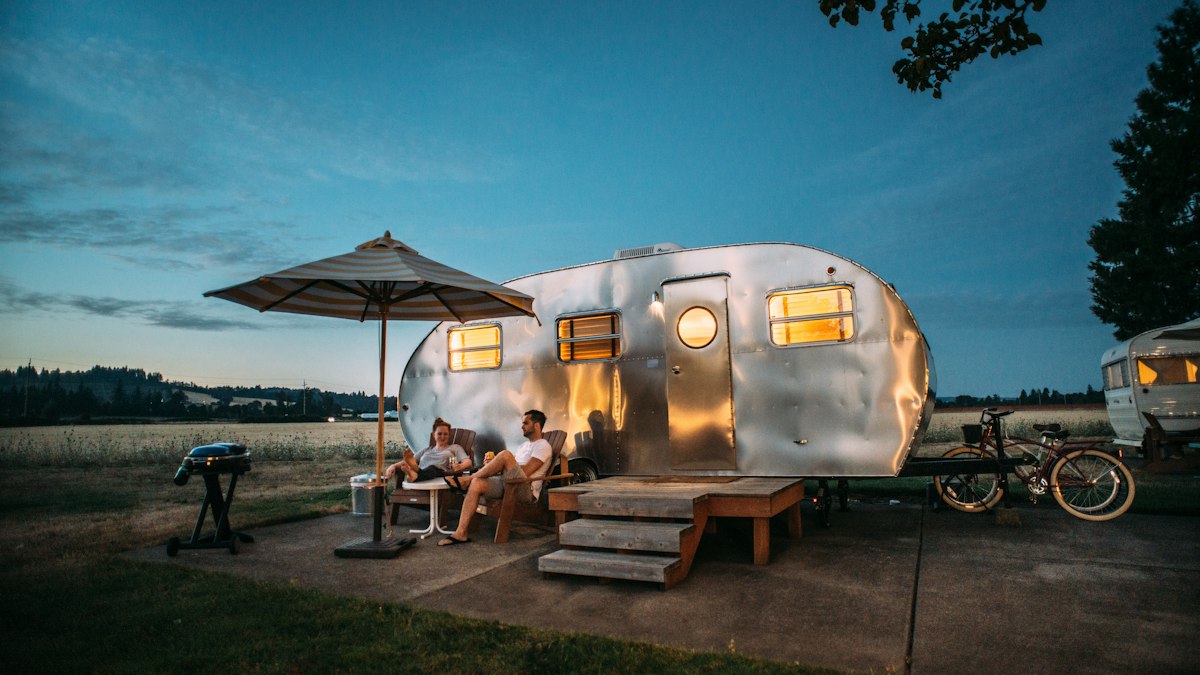
 Off-grid camp living: The Giantz 1024Wh station powers a 50L camping fridge, drone battery chargers, and Starlink satellite internet under eucalyptus shade.
6. MPPT vs PWM Solar Controllers: Maximizing Amp Yield in Shaded Campsites
Harvesting solar power in the Australian bush presents unique challenges due to cloud cover and passing gum tree shadows. Connecting a solar blanket to your power station requires a charge controller:
- Pulse Width Modulation (PWM): Acts like a simple mechanical on-off switch. A PWM controller pulls down a 20V solar blanket voltage directly to battery level (approx. 13.5V), discarding the excess 6.5 volts entirely as wasted heat. PWM efficiency rarely exceeds 68%.
- Maximum Power Point Tracking (MPPT): Features advanced high-speed digital algorithms that continuously sweep the voltage and current curves ($V imes I$) to find the peak power point up to 100 times per second. An MPPT controller converts surplus voltage into increased charging current, boosting solar energy harvest by 25% to 35% in overcast conditions or partial morning shade.
7. Visual Performance Benchmark: Battery Cycle Lifespan & Thermal Breakdown Thresholds
Independent testing proves that battery chemistry and cell form-factor dictate the true lifetime cost of off-grid energy storage:
8. 4WD Touring & GVM Payload Savings: 11kg Lithium vs 35kg Lead-Acid
Managing Gross Vehicle Mass (GVM) is one of the most critical safety aspects of Australian overland 4WD travel. Equipping a vehicle with bullbars, winches, roof racks, recovery tracks, water tanks, and rooftop tents leaves shockingly little remaining payload for camping gear.
A dual-battery lead-acid setup—consisting of a 100Ah AGM auxiliary battery (31 kg), heavy steel mounting tray (4 kg), and DC-DC charger with heavy copper cabling (3 kg)—adds approximately 38 kg of permanent deadweight to your vehicle. In contrast, the Giantz 1024Wh LiFePO4 station weighs just 11.2 kg all-inclusive and can be lifted out of the vehicle and carried right to the campfire or beachfront picnic table.
9. Australian Standards AS/NZS 3001.2:2022 & ERAC Electrical Compliance
Under Australian law, portable lithium energy storage systems and high-voltage AC inverters must adhere to strict regulatory compliance:
- AS/NZS 3001.2:2022: Specifies electrical installations in caravans, camper trailers, and recreational vehicles. All 240V AC output sockets must feature integrated residual current devices (RCD) or isolated winding earth-neutral protection to protect users from electrocution in damp outdoor environments.
- ERAC RCM Mark: Managed by the Electrical Regulatory Authorities Council (ERAC), the Regulatory Compliance Mark (RCM) certifies that the unit has passed rigorous electrical insulation breakdown, electromagnetic compatibility (EMC), and fire containment testing.
Understanding Inductive Inrush Current: Continuous Watts vs Peak Surge
When selecting a portable power station, camper buyers frequently confuse continuous running wattage with inductive peak surge current. Electrical appliances fall into two distinct load categories:
- Resistive Loads (Zero Inrush): Devices such as laptop USB chargers, LED camp floodlights, soldering irons, and electric blankets draw an identical current from the instant they switch on. A 60W laptop charger draws exactly 60W throughout its operation.
- Inductive Motor Loads (High Inrush Surge): Appliances with rotating magnetic compressors—such as 12V/240V camping fridges, ice makers, power drills, and blender motors—require a momentary burst of magnetic flux to overcome mechanical rotor inertia at rest. An appliance rated at 80W continuous can pull a transient surge of 350W to 500W for 150 milliseconds upon startup.
The Giantz 1200W station is engineered with a high-overload pure sine wave inverter capable of delivering up to 2,400W peak surge power. This massive thermal overhead prevents the inverter's overcurrent protection circuit from tripping when your camping fridge compressor cycles on in the middle of a hot summer night.
Solar Zenith Angles & Seasonal Solar Blanket Alignment in Australia
Laying a solar blanket flat on your vehicle roof or camp table reduces potential energy harvest by up to 35%. Monocrystalline silicon cells generate peak amperage when solar rays hit the photovoltaic glass at an exact perpendicular 90-degree angle.
To calculate the optimal solar tilt angle across Australia: - Summer (December–February): Tilt angle = $\text{Latitude} - 15^\circ$ (approx. 15° to 20° tilt in Sydney and Melbourne, virtually flat in Darwin). - Winter (June–August): Tilt angle = $\text{Latitude} + 15^\circ$ (approx. 45° to 50° tilt in Southern Australia). - Azimuth Orientation: Always face solar blankets toward True North (adjusting for magnetic declination). Re-positioning your folding solar blanket three times daily (morning, noon, and mid-afternoon) yields up to 45% more Watt-hours into your LiFePO4 battery compared to static mounting.
10. Off-Grid Power Solutions Comparison Matrix
Compare the four primary mobile electrical power architectures used in Australian touring:
Frequently Asked Questions: LiFePO4 Power Stations
Can a 1200W power station run a portable coffee machine or electric kettle?
Yes! The Giantz 1200W pure sine wave inverter easily powers compact travel kettles (800W–1000W) and pod espresso machines (typically 1,150W). For heavy home espresso machines exceeding 1,500W, consider pre-boiling water on a gas burner or opting for an induction plate on a 1000W setting.
Can I charge the power station from my car's 12V cigarette socket while driving?
Absolutely. The included 12V DC car charging cable connects directly to your vehicle's auxiliary socket, drawing a safe 8A to 10A (approx. 100W–120W) from your alternator while you drive to your next camp destination.
Will cold desert temperatures damage the LiFePO4 battery?
LiFePO4 batteries can safely discharge power in freezing temperatures down to -10°C without issue. However, charging a lithium battery below 0°C can cause lithium plating on the anode. The integrated Battery Management System (BMS) in Giantz units includes cold-temperature charging protection, safely regulating current until internal cell temperatures warm up.
Power Your Next Outback Expedition with LiFePO4 Energy
Discover ultra-durable, pure sine wave LiFePO4 portable power stations and high-efficiency solar blankets built for demanding Australian 4WD adventures. Fast tracked dispatch across all Australian states.