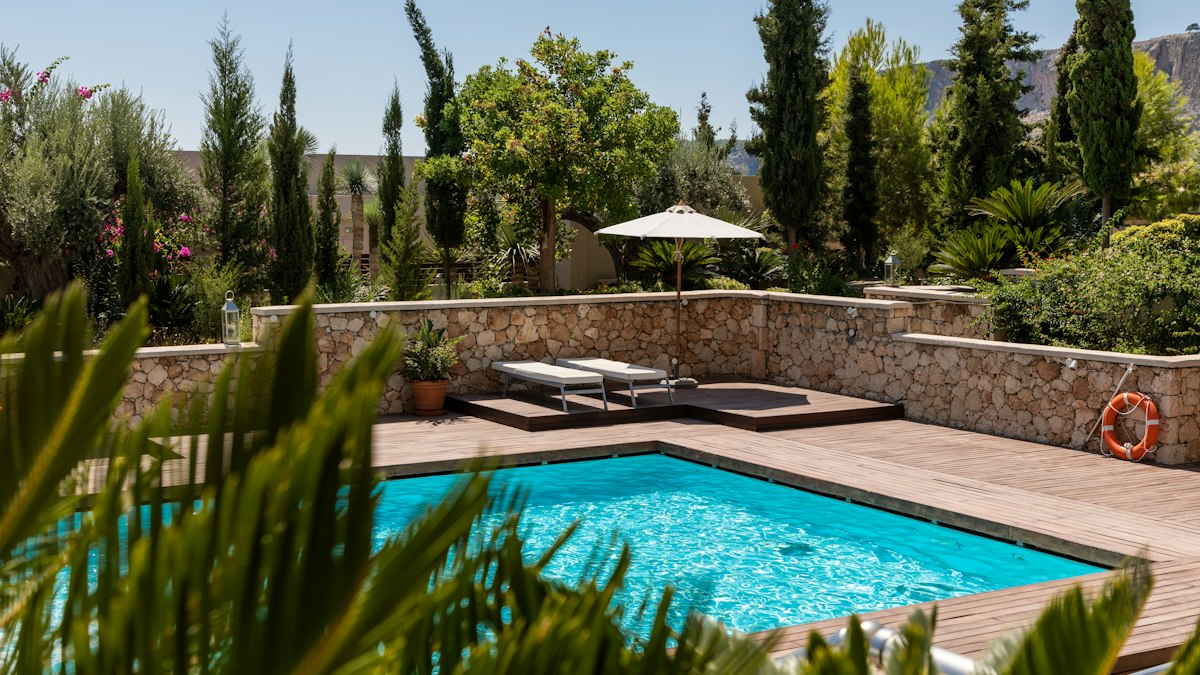
With over 1.4 million residential swimming pools across Queensland, New South Wales, Victoria, and Western Australia, the backyard swimming pool is the centerpiece of Australian summer life. However, traditional suction-side cleaners (such as pulsating diaphragm disc units) tether to your skimmer box with tangled floating hoses, choke pool filtration baskets with eucalyptus leaves and gum twigs, and force massive 1,500W main filter pumps to run for 8+ hours daily—costing over $500 per year in electricity alone. In this definitive 2026 engineering teardown, ShopZone evaluates autonomous Cordless Robotic Pool Cleaners, analyzing hydrodynamic vortex suction, waterline scrubbing algorithms, micron debris separation, and energy savings under Australian SPASA guidelines.
- 1. The Mechanics of Autonomous Cleaning: Robotics vs Suction-Side Disc Sweepers
- 2. Why Traditional Skimmer-Tethered Cleaners Strain Pumps & Waste Energy
- 3. Cordless Lithium vs Floating Swivel Cables: Eliminating Tangle Hazards
- 4. In-Body Engineering & Devanti Cordless Robotic Pool Cleaner Teardown
- 5. Featured Product Showcase: Devanti Cordless Wall-Climbing Robotic Pool Cleaner
- 6. Wall-Climbing Physics & Active Waterline Biofilm Scrubbing Technology
- 7. Visual Performance Benchmark: Annual Electricity Running Costs Comparison
- 8. Filtration Micron Ratings: Fine Silt, Algae Spores vs Gum Tree Foliage
- 9. SPASA Australia & AS/NZS 3136 Electrical Water Safety Compliance
- 10. Chemical Balance, Saltwater Chlorination & Winter Storage Protocols
1. The Mechanics of Autonomous Cleaning: Robotics vs Suction-Side Disc Sweepers
For more than three decades, the iconic mechanical suction disc cleaner—clacking rhythmically across the pool floor—has been a staple of Australian backyards. While simple in design, suction cleaners rely on brute hydraulic force generated by the primary swimming pool filtration pump. As water is sucked through a 10-meter corrugated hose, leaves and debris are pulled directly into the skimmer basket and sand/cartridge filter, restricting water circulation and placing continuous backpressure on the pump impeller.
In contrast, an autonomous robotic pool cleaner is a completely self-contained electrical unit. It houses its own dedicated onboard electric drive motors, an internal high-velocity centrifugal water turbine, and an ultra-fine internal filtration basket. Operating independently of the pool's main plumbing, the robot vacuums debris, scrubs algae from pool tiles, and circulates filtered water back into the pool while consuming a fraction of the electricity. For more outdoor care and garden upgrades, browse the ShopZone Home & Garden Collection.
When a suction cleaner hose is plugged into your skimmer box, the skimmer's surface skimming weir is completely disabled. Leaves, pollen, and floating dust that would normally be skimmed off the top within 15 minutes are forced to sink to the bottom, promoting black algae blooms and doubling chemical consumption.
2. Why Traditional Skimmer-Tethered Cleaners Strain Pumps & Waste Energy
Running a standard 1.5 Horsepower (1,100W to 1,500W) pool pump merely to drive an erratic suction cleaner is remarkably inefficient under Australian power tariffs. In peak summer, keeping water crystal clear requires running the pump 6 to 8 hours daily. With average grid electricity priced at $0.35/kWh, this translates to over $550 to $700 per year just in pump running costs.
Furthermore, fine sand and eucalyptus debris trapped in the suction line rapidly clog the pool's sand or cartridge filter, requiring frequent backwashing that dumps hundreds of liters of chemically treated, salted pool water down the council sewer drain. A robotic cleaner catches debris in its own top-access canister, keeping your primary pool filter clean and drastically reducing chemical rebalancing costs.
3. Cordless Lithium vs Floating Swivel Cables: Eliminating Tangle Hazards
Early generation robotic pool cleaners required a long, thick floating power cord running to a 240V transformer on the patio. While effective, floating cords suffer from the notorious "cable coiling" problem—repeated turns in the pool cause the cable to twist into knots, marooning the robot in the shallow end.
Modern cordless robotic cleaners eliminate cords entirely. Powered by high-capacity sealed waterproof lithium-ion battery packs (typically 6,600mAh to 8,800mAh), cordless robots run untethered for 120 to 150 minutes on a single charge. When the battery level drops below 5%, intelligent auto-docking software commands the robot to drive up to the waterline nearest the pool steps, allowing effortless retrieval with an included hook pole without getting your hands wet.
4. In-Body Engineering & Devanti Cordless Robotic Pool Cleaner Teardown
A technical examination of the Devanti Cordless Robotic Pool Cleaner showcases the precision waterproof engineering and hydrodynamic design built into the unit:
 Internal hardware teardown: Brushless twin drive motors, 180-micron ultra-fine filter basket, magnetic contactless charging interface, and IPX8 hermetic sealing.
| Battery Pack | 6,600 mAh High-Discharge Li-ion |
| Operating Runtime | 120–150 Mins Continuous |
| Recharge Time | 2.5–3.0 Hours Fast Magnetic |
| Drive Motors | Dual 50W Brushless Submersible |
| Waterproof Standard | IPX8 Submersible to 3.0 Meters |
| Net In-Air Weight | 5.8 kg (Quick-Water-Purge) |
| Filter Mesh Rating | 180-Micron Ultra-Fine Dual Mesh |
| Suction Velocity | 10,000 Litres / Hour Throughput |
| Coverage Area | 80–100 m²/hr (Up to 12m Pools) |
| Incline & Wall Climbing | Slopes, Walls & Waterline Scrub |
| Auto-Berthing | Auto Wall-Park on Low Battery |
| Surface Compatibility | Concrete, Pebblecrete, Fiberglass, Vinyl |
5. Featured Product Showcase: Devanti Cordless Wall-Climbing Robotic Pool Cleaner
For pool owners who want sparkling clean pool floors, coves, and vertical tile waterlines without untangling greasy hoses or listening to noisy suction pulses, the Devanti Cordless Robotic Pool Cleaner offers automated luxury at a fraction of the cost of commercial cleaners.
Devanti Cordless Robotic Swimming Pool Cleaner
Featuring smart gyroscope navigation, wall-climbing scrubbing rollers, 180µm dual filter canister, and automatic edge parking.
 Crystal-clear summer swimming: The Devanti cordless robot traverses pebblecrete and fiberglass pools, effortlessly cleaning floor slopes and vertical walls.
6. Wall-Climbing Physics & Active Waterline Biofilm Scrubbing Technology
In Australian pools, the dirtiest zone is not the floor—it is the waterline. Body oils, sunscreen residue, organic dust, and calcium minerals collect at the surface tension boundary, forming a stubborn brownish scum ring along the tile perimeter.
The Devanti robot achieves vertical wall climbing using high-traction thermoplastic rubber tracks combined with horizontal thrust vectoring. As the robot climbs the wall, its top-facing water exhaust jet redirects 90 degrees outward, generating negative hydraulic pressure that pins the robot firmly against vertical tile or fiberglass surfaces. Once at the water's surface, active front scrubbing brushes rotate at twice the track speed, scrubbing away sunscreen oils and biofilm before they can bake into the tiles under the summer sun.
7. Visual Performance Benchmark: Annual Electricity Running Costs Comparison
Calculating the true annual electricity cost under standard Australian residential energy tariffs ($0.35 per kWh) reveals the staggering cost efficiency of low-voltage robotics over traditional pump-driven suction cleaners:
8. Filtration Micron Ratings: Fine Silt, Algae Spores vs Gum Tree Foliage
Filtration precision determines whether a pool cleaner merely moves dirt around or genuinely purifies the water:
- Standard Skimmer Baskets (1,000 to 2,000 microns): Only stop coarse gum leaves and twigs. Fine red desert dust, lawn mower grass clippings, and dead algae blow straight through back into the pool.
- 180-Micron Ultra-Fine Robotic Filter Basket: The Devanti dual-mesh basket traps fine river silt, beach sand tracked in by kids, dog hair, and microscopic organic pollen. The top-access basket snaps open in 5 seconds and rinses clean with a garden hose in under 30 seconds.
9. SPASA Australia & AS/NZS 3136 Electrical Water Safety Compliance
Operating battery electronics submerged in water requires strict compliance with Australian electrical and pool safety guidelines:
- AS/NZS 3136: Australian and New Zealand safety standard governing electrical equipment for swimming pool water treatment and cleaning. All battery chargers must feature galvanic isolation, preventing dangerous stray AC voltage from reaching wet hands or pool surroundings.
- SPASA Australia Guidelines: The Swimming Pool & Spa Association (SPASA) advises that reducing main filter pump runtimes by deploying autonomous robotic cleaners not only saves grid electricity but extends the mechanical life of salt chlorinator cells and quartz sand filter media.
Navigation Intelligence: Algorithmic Grid Scanning vs Mechanical Random Bounce
Traditional suction disc cleaners operate on chaotic random mechanics: as water pulses through the diaphragm, the cleaner jerks forward at random angles upon striking a pool wall. In practice, this means suction sweepers repeatedly travel across the same 30% of the pool floor while completely ignoring deep corners, ledges, and steps for weeks on end.
The Devanti Cordless Robotic Cleaner incorporates an advanced six-axis MEMS inertial measurement unit (IMU) comprising an electronic gyroscope, tri-axial accelerometer, and underwater acoustic sonar. Upon descending to the pool floor, the onboard microprocessor calculates the pool's geometric perimeter and executes systematic, overlapping S-pattern passes. This structured grid coverage ensures that 100% of the floor and transition slopes are swept and vacuumed in under 90 minutes, eliminating missed dead spots.
Water Chemistry Protocols: Protecting Waterproof Seals in Salt & Mineral Pools
Over 80% of residential Australian swimming pools utilize saltwater chlorinator cells or magnesium mineral systems. While gentle on swimmers' eyes, aggressive pool chemistry can compromise robotic equipment if chemical balance is neglected:
- pH Range (7.2 to 7.6): If pool pH falls below 7.0, acidic water attacks synthetic silicone O-rings and waterproof motor seals, leading to moisture intrusion. Conversely, pH above 7.8 causes calcium scale to precipitate onto moving brush roller bearings.
- Free Available Chlorine (1.5 to 3.0 PPM): Never run a robotic pool cleaner during shock chlorination treatments (superchlorination > 10 PPM). Extreme chlorine concentrations oxidize plastic chassis components and accelerate elastomer aging. Always wait 24 to 48 hours after chlorine shock before submerging your robot.
- Saltwater Salinity (3,000 to 6,000 PPM): The Devanti cleaner is fully engineered for standard Australian saltwater salinity. However, when pulling the robot from the pool, always hose it thoroughly with fresh tap water to prevent salt crystals from drying inside the track rollers.
10. Pool Cleaner Technology Comparison Matrix
Evaluate the four core swimming pool cleaning technologies across operational metrics:
Frequently Asked Questions: Cordless Robotic Pool Cleaners
How do I retrieve the cordless robot from the bottom of the deep end?
You never have to dive in! The Devanti robot features intelligent auto-parking sensors. When its cleaning cycle finishes or battery falls below 5%, it automatically navigates to the nearest pool wall and parks at the edge. Additionally, the unit includes an ergonomic retrieval hook that attaches to any standard Australian telescopic pool pole, allowing you to lift the 5.8kg robot effortlessly out of the water.
Will this robotic cleaner work in saltwater swimming pools?
Yes! The drive shafts and brushless motors are manufactured from marine-grade 316 stainless steel and non-corrosive polymers specifically designed for Australian saltwater chlorinator systems up to 6,000 PPM salinity. Simply rinse the robot with fresh tap water after each cycle before recharging.
Does the robot handle pools with sloped bottoms and deep ends?
Yes. The high-torque dual brushless motors and high-traction rubber treads easily climb floor inclines up to 25 degrees, transitioning seamlessly from shallow wade zones to 2.5-meter deep ends without slipping or getting stuck.
Enjoy Crystal-Clear Swimming Pools with Autonomous Robotics
Experience effortless pool care with cordless lithium robotic pool cleaners and precision filtration built for Australian summer heat. Fast tracked dispatch across all Australian states.